One of the most common debates and discussions I have, on a regular basis with all level of mangers, is hiring new talent. This is perhaps one of the most complex, yet simplest aspects to any organization. This sounds like, and is an oxymoron without any doubt; but one must ask the question, why? Let me demonstrate this, look at a recent post and response I found on Linked In:
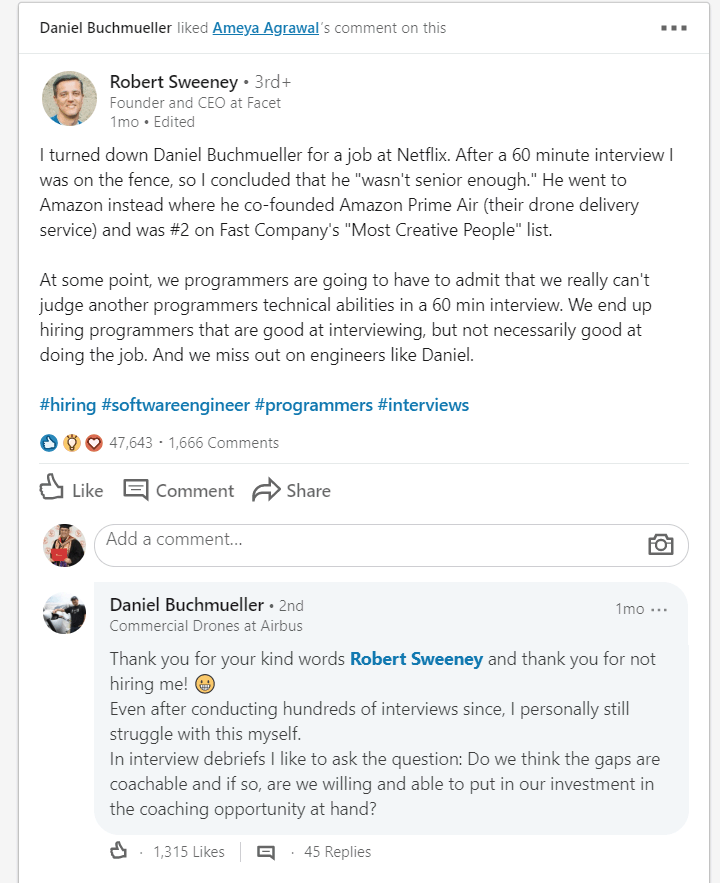
So let us look at the typical process in most HR departments for this action. Someone in the organization, usually a manger of some level, decides that they need another person to perform a task. After all the approvals are given for this request, some kind of form is completed and sent to an HR department. Often this forms includes some type of “job description”. This is what the HR department uses to “weed out” all the applications they receive. Often times quick checks are put in these requirements, mainly to help reduce the number of candidates, and workload for the HR specialist. Often, one of these are educational experience, after all this is the easiest way to limit a pool. The next step is to look at experience, after all that is what we are looking for; right? We look at a resume/CV for this information. But what most do not consider is this important question, what is a resume/CV? I had a talent agent one time many years ago ask me this question, and what an eye opening discussion this was to become. Think about this for a moment, what does this information represent? He explained it like this, it is an obituary; what has been accomplished in the past, alone. It does not demonstrate what is capable to be done today or tomorrow, just what has been. Think about this thought for a moment, everything that happens to use everyday, changes us; this is what makes us who we are, today. Everything changes in live, moment by moment; everyone of these decisions changes us and affects us; permanently. It molds us into who we are.
For a moment let us explore this concept in more depth. A few years ago a local University that was for profit, but is not any longer, so they say, was looking for a director for the arena they had just completed. The HR specialist stated that the requirements for the position required a certain amount of “experience” running an arena. How many people in the country have this specific skill? How limited is that pool? Think about this for a moment, the candidates that you get for this position will be looking to leave their current organization. Have you ever asked why they wish to leave? What baggage are they bringing? Is this really the best candidate? So what would have happened if you were looking at the skills that the job required, rather then experience, could you have found that HR gem that could rewrite the organization? Our own presuppositions can set us up to be less successful, how is a SWOT analysis affected by these presuppositions? Have you ever asked your self these questions?
Is experience in a job position the only way to see future success? What if we looked at skills that were required for that position instead? Let us look at something that everyone can relate to, school. Let us say an individual is a principle of a school, and has been that for 10 years. What skills are they using everyday? Are they teaching or managing? What skills do they truly use? Communications, planning, organizing, scheduling, conflict resolution, leading, etc. Could this person be capable of running the arena that we mentioned before? Ask your self this question, what level of management is a principle of a school? In most cases this is a first level manager, then ask what level is the director of the area, that would be a senior or executive level. Do these two positions require the same skills in their performance? But could the principle be a grocery store manager? That may be much closer to their skill sets that they use.
The one aspect that is almost always overlooked when hiring for any position is the level of the position. Individuals that have held similar levels of positions, will most likely have the skilled sets that are required to be successful in a new position.
The question that begs to be asked is why should we care about this? Look at the example above, what if this was the next Ricardo Semler, Steve Jobs, Bill Gates, or even better? The HR gem that is overlooked could even be the next Albert Einstein, how would you feel if you overlooked this discovery because of your own presuppositions? What kind of resource did you loose? So the next time you get ready to hire someone, change your view, look at skills rather than past experience. The next great Abraham Lincoln may be on your doorstep, knocking, right now.